The Directly Elected Mayor Model Is Failing. Here’s Why.
A critique of the directly elected mayor model, arguing that it creates competing democratic mandates and risks institutional deadlock, with Limerick serving as an early warning for broader local government reform.
Cllr Rory Hogan
2/26/20263 min read
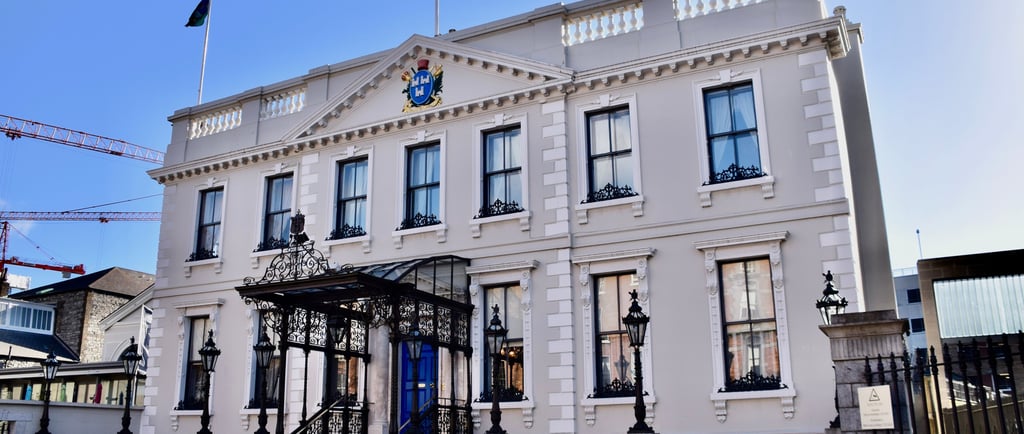
When Limerick voted to introduce Ireland’s first directly elected mayor, it was presented as a bold step forward for local democracy. The promise was straightforward: stronger leadership, clearer accountability, and faster decision-making. After decades of criticism that local government lacked authority and visibility, this was meant to be a corrective.
What we are witnessing instead should give pause to anyone considering expanding the model.
The problem is not personality. It is structure.
The directly elected mayor system concentrates executive authority in a single individual with a personal mandate from the electorate. That mandate is real and should not be dismissed. But so too are the mandates held by councillors elected across multiple parties and independents. In any local authority, councillors represent diverse communities, political traditions and priorities. They are not subordinate actors; they are democratic officeholders in their own right.
The flaw in the directly elected model lies in what happens when those mandates collide.
In Ireland’s parliamentary democracy, executive authority does not rest on direct election alone. A Taoiseach must command the confidence of the Dáil. A government must negotiate and agree a Programme for Government before it takes office. Leadership begins with alignment. Compromise is not optional; it is foundational.
The directly elected mayor model removes that requirement at local level. It creates a situation where executive power can operate independently of the majority in the council chamber. There is no obligation to form a coalition. No requirement to secure the confidence of councillors. No structured agreement at the outset of a term.
Compromise becomes a matter of choice rather than necessity.
That is not an abstract concern. It is precisely the tension now visible in Limerick. A directly elected executive, armed with a citywide mandate, finds themselves governing alongside a council majority drawn from other political groupings. Each side can claim democratic legitimacy. Neither side is institutionally obliged to yield.
When executive authority and council majority are not structurally aligned, several consequences follow. Decision-making slows. Political disagreement hardens into institutional rivalry. Policy debates spill into procedural stand-offs. Responsibility becomes blurred in the public mind. The public is left asking a basic question: who is actually in charge?
A five-year term is a long time in local government. If alignment does not exist at the beginning, there is no guarantee it will emerge later. Citizens cannot reasonably be expected to wait years for political stalemate to resolve itself. Governance should not depend on personality, goodwill, or electoral brinkmanship to function.
Supporters of the model argue that direct election enhances democratic legitimacy. Visibility increases. Accountability becomes clearer. That argument has intuitive appeal. But legitimacy in a parliamentary system has always been dual. It flows from the people and from their elected representatives. Durable governance requires both.
Ireland’s local government system is already among the weakest in Europe in terms of structural autonomy. The European Commission’s Local Autonomy Index consistently ranks Ireland near the bottom among EU member states. Public trust reflects that fragility. OECD figures show significantly higher confidence in local government in countries where authority, accountability and executive design are clearly structured.
Against that backdrop, introducing a presidential-style executive into a relatively weak local system risks compounding instability rather than resolving it. Concentrating power without embedding representative alignment may create clarity in theory but conflict in practice.
This is not an argument against reform. Reform is necessary. Our local authorities need stronger leadership, clearer accountability and more visible decision-making. But reform must fit the political culture and constitutional traditions of the State.
If executive leadership at local level is to be strengthened, it should be strengthened in a way that mirrors what works nationally. A mayor could serve a fixed term to provide continuity. But that mayor should be elected by and accountable to the full council. Executive authority should begin with majority support within the chamber, not operate alongside it. A structured executive team drawn proportionally from elected representatives would embed cooperation into the system rather than competition.
Such an approach would not weaken leadership. It would stabilise it. It would ensure that policy direction rests on agreement reached at the outset of a term, rather than on two competing programmes seeking dominance.
The lesson from Limerick is not that ambition was misplaced. It is that presidential-style politics does not sit comfortably within Ireland’s parliamentary framework. When we import institutional models from elsewhere, we must ensure they integrate with our own democratic architecture.
Strong personalities will always emerge in public life. That is neither new nor problematic. The question is whether institutions require cooperation by design or merely hope for it.
If we are serious about strengthening local democracy across all councils, we must learn from what is unfolding. Executive authority should begin with alignment. Reform should reduce the risk of prolonged deadlock, not institutionalise it.
The aim of reform was to make local government stronger and more decisive. If it instead produces recurring stand-off, public confidence will erode further. Governance should be made more stable, not more combustible.
Before this model is extended elsewhere, it is worth asking a simple question: does it embed cooperation, or does it risk entrenching division?
The answer will determine whether local government reform strengthens democracy or strains it.